Open Weights Go Multimodal: Analyzing Meta's Llama 3.2 Architecture and On-Device Edge Models
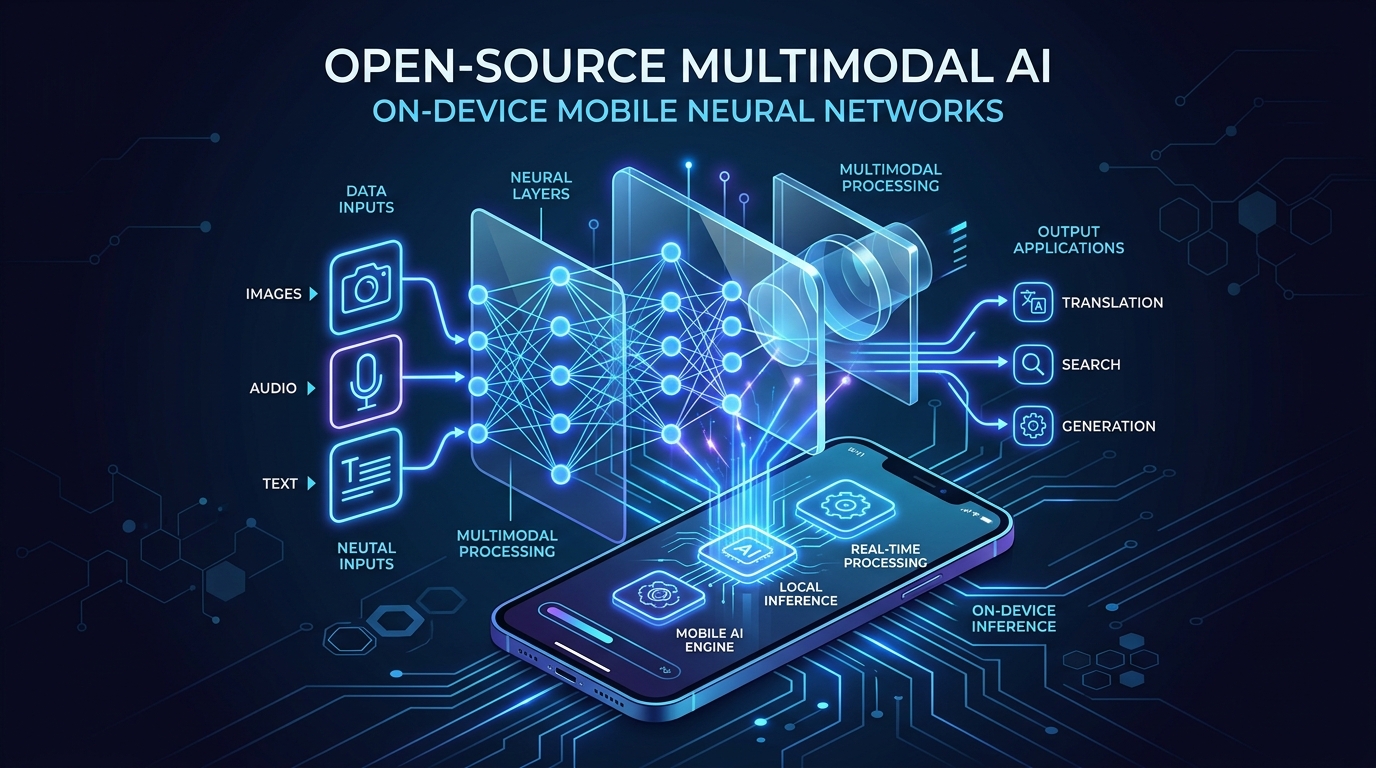
The open-weights artificial intelligence ecosystem achieved a monumental milestone with the debut of Meta Llama 3.2. While previous open-source milestones centered primarily on text generation and code completion, Llama 3.2 addresses two of the most critical demands from the global developer community: native visual understanding and high-efficiency on-device edge computing.
By introducing 11B and 90B multimodal vision models alongside ultra-compact 1B and 3B text models with a massive 128,000-token context window, Meta has demonstrated that open-source AI can compete directly with closed commercial APIs while running locally on smartphones and laptops.
---
1. Architectural Innovation: The Vision Adapter Pipeline
Unlike systems trained from scratch as monolithic vision-language models, Meta engineered Llama 3.2's vision models by taking their battle-tested Llama 3.1 text models and integrating cross-attention vision adapters:
1. Pre-trained Image Encoder: High-resolution image patches are processed through an aligned vision transformer encoder. 2. Cross-Attention Adapter Layers: Specially initialized adapter layers are interspersed throughout the frozen text transformer stack, enabling the model to inject visual tokens directly into attention heads without disrupting text capabilities. 3. Joint Multimodal Fine-Tuning: The composite network undergoes supervised fine-tuning (SFT) and direct preference optimization (DPO) on mixed text-image pairs.
This architecture preserves the high reasoning and conversational quality of Llama 3.1 while adding state-of-the-art document comprehension, chart extraction, image captioning, and visual object localization.
---
2. On-Device Edge Models: 1B and 3B Parameters
While the 90B vision model caters to cloud deployments, the 1B and 3B parameter models represent the unsung heroes of Llama 3.2. Optimized through aggressive pruning and knowledge distillation from larger teacher models, these lightweight weights: - Support full 128K context windows, allowing a local smartphone to ingest entire manuals or novels into RAM. - Are natively optimized for Qualcomm Snapdragon NPU, MediaTek Dimensity, and Apple Silicon (Metal) via PyTorch ExecuTorch. - Enable high-throughput on-device summarization, rewriting, and intent extraction with zero cloud latency and absolute data privacy.
---
3. Performance Matrix
| Model Variant | Primary Target | Context Window | Key Strengths | Deployment Footprint | | :--- | :--- | :--- | :--- | :--- | | Llama 3.2 1B | Edge & Mobile | 128K tokens | Fast text extraction, formatting | < 1.5 GB quantized | | Llama 3.2 3B | Laptops & Tablets | 128K tokens | Multilingual rewriting, Q&A | ~ 2.5 GB quantized | | Llama 3.2 11B Vision | Single GPU Workstations | 128K tokens | Document OCR, chart reasoning | Fits on 1x RTX 4090 | | Llama 3.2 90B Vision | Enterprise Cloud | 128K tokens | Frontier-grade multimodal reasoning | Multi-GPU cluster |
---
4. Why It Matters for Developers
For developers building on AlsoClick, Llama 3.2 represents a decisive shift toward sovereign, private AI deployments: - Elimination of SaaS API Costs: Edge models make local document processing and agent routing virtually free to operate. - GDPR & Privacy Compliance: Healthcare, financial, and legal applications can run multimodal extraction directly on client machines without sending sensitive photos to third-party endpoints. - Llama Stack Tooling: The introduction of official Llama Stack distributions standardizes containerized deployment across AWS, Azure, on-prem Docker, and mobile devices.
---