GitHub Copilot Workspace: Transitioning from Code Completion to Specification-Driven Engineering
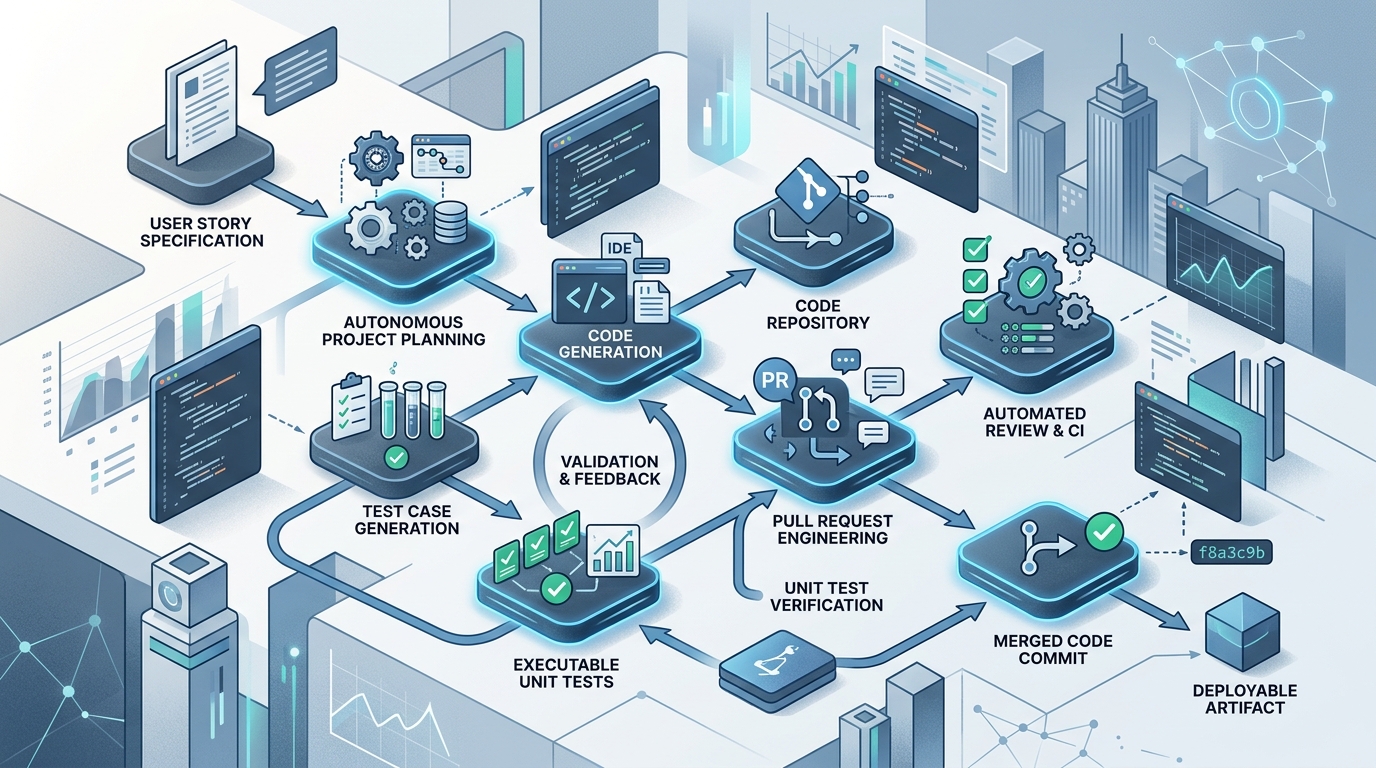
Since its launch in 2021, GitHub Copilot has been the undisputed pioneer of AI code assistance. However, inline ghost-text completion only assists developers with the tactical mechanics of typing. The actual cognitive labor of software engineering involves reading feature requests, investigating legacy codebases, decomposing requirements into architecture plans, and testing pull requests.
Through GitHub Copilot Workspace, developed by GitHub Next, Microsoft has introduced a radical vision for the future of engineering: an environment where developers operate as architects directing autonomous issue-to-pull-request workflows.
---
1. The Four-Stage Spec-to-PR Pipeline
Copilot Workspace replaces unstructured prompting with a disciplined, four-stage engineering lifecycle:
1. Issue Analysis & Specification: The developer opens an existing GitHub Issue. Workspace reads the issue description, comments, and linked issues, formulating a comprehensive Markdown specification that defines the feature requirements and edge cases.
2. Implementation Strategy: Copilot generates an explicit step-by-step strategy. Developers can edit, reorder, or delete proposed steps before any code is generated.
3. Executable File Plan: The model identifies every file in the repository that requires modification or creation, specifying the exact functions and types to change.
4. Interactive Diff Generation & Container Testing: Workspace generates the proposed code diffs and mounts the repository inside an isolated cloud container (GitHub Codespaces). It runs automated test suites (npm test, pytest, or cargo test) to verify that the implementation compiles and passes all checks.
---
2. Granular Human Oversight vs Black-Box Autonomy
A common failure mode of fully autonomous coding agents is the "black-box surprise"—an agent modifies 50 files without explanation, leaving the human engineer with a massive, unreviewable mess.
Copilot Workspace is explicitly engineered around progressive steerability: - Every stage (Spec $ ightarrow$ Plan $ ightarrow$ Code) is fully editable in rich text. - If the model misinterprets a requirement during the specification phase, the developer corrects the text before compute is wasted generating incorrect code. - Developers can test the running web app inside a live browser preview before committing the branch.
---
3. The Changing Role of the Software Engineer
As tools like Copilot Workspace mature, the definition of software development is undergoing a fundamental transformation: - From Syntax Typist to System Architect: Engineers spend less time writing repetitive boilerplate and more time defining precise specifications, reviewing diffs, and modeling data relationships. - Accelerated Bug Triage: Maintenance backlogs—such as updating deprecated dependencies, fixing minor UI glitches, and writing unit tests—can be assigned to Workspace to prepare initial PR drafts automatically.
---
4. Why It Matters
GitHub Copilot Workspace illustrates the natural trajectory of agentic coding: moving outside the boundaries of the text editor into the broader software lifecycle. By grounding AI assistance in structured specifications and automated cloud verification, GitHub is making end-to-end software delivery faster, more reliable, and accessible to engineering teams of all sizes.
---