Cursor Composer & Multi-File Generation: The Architecture of Semantic Code Diffing
For the first three years of the generative AI revolution, developer assistance was largely confined to single-file autocomplete. Programmers typed code, paused for 500 milliseconds, and waited for an inline ghost-text suggestion. While helpful for boilerplate, this model failed completely for architectural tasks: creating a new feature requires modifying database schemas, writing API route handlers, updating TypeScript interfaces, and adjusting UI components simultaneously.
In September 2024, Anysphere introduced Cursor Composer, fundamentally altering how engineers build software by enabling multi-file generation and interactive semantic diffing directly within the editor.
---
1. How Composer Indexes and Understands Full Repositories
Writing code across multiple files without introducing type collisions requires deep codebase context. Composer achieves this through a multi-tier indexing pipeline:
- Abstract Syntax Tree (AST) Parsing: Cursor parses source code into semantic trees, extracting symbol definitions, imported dependencies, class hierarchies, and function signatures.
- Local Embedding Vector Stores: The project repository is indexed locally into vector chunks. When a developer issues a prompt (e.g., *"Add Stripe webhook verification and update user balance in the SQLite database"*), Composer retrieves only the relevant schema files, controller functions, and utility types.
- Live LSP Diagnostic Ingestion: Cursor actively monitors TypeScript and language server diagnostics. If a suggested edit introduces a compile-time type mismatch, Composer reads the compiler error in real time and automatically corrects its output.
---
2. The Spec-Driven Workflow
Composer shifts developer focus from low-level line typing to architectural orchestration. The most effective engineering teams on AlsoClick adopt a Spec-Driven Development loop:
1. Prompt Specification: The developer writes a detailed Markdown specification or points Composer to an existing issue description.
2. Context Pinning: The engineer explicitly pins the relevant files using @file or @folder tags to ensure the model focuses on authoritative interfaces.
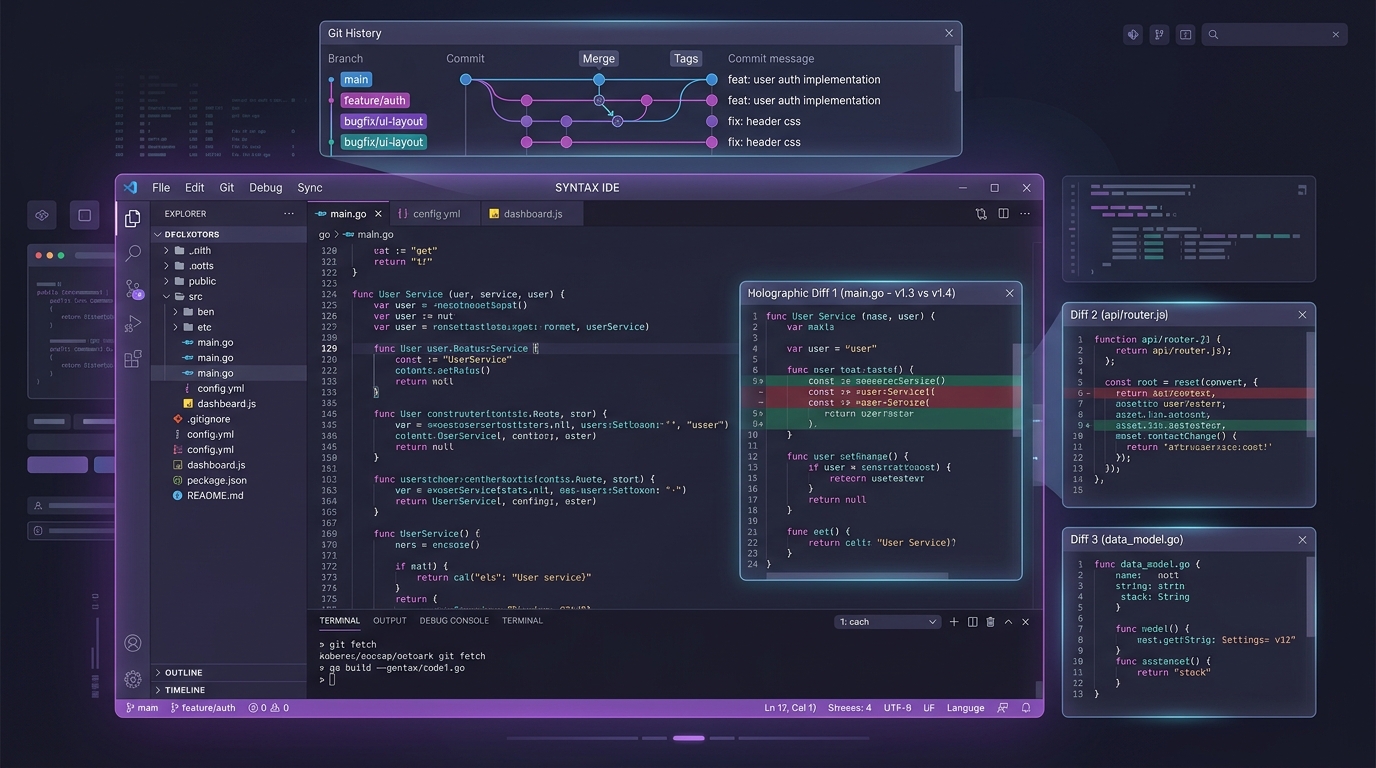
3. Concurrent Multi-File Patching: Composer streams edits across 4, 8, or 12 files simultaneously, presenting each modification as a clear Git-style side-by-side diff.
4. Interactive Review & Acceptance: The developer can accept, reject, or prompt refinements on individual diff blocks with a single keystroke (Cmd+Shift+Y / Cmd+Shift+N), maintaining full control over the codebase.
---
3. Eliminating Copy-Paste Hallucinations
Before Composer, using web-based LLMs like ChatGPT or Claude for coding required a tedious, error-prone workflow: copying file contents into chat, copying code blocks back into the IDE, and manually resolving broken import paths.
Composer eliminates this cognitive overhead. Because the model operates directly on the editor's file buffer: - File paths are created automatically if they do not exist. - Relative imports are resolved accurately based on actual folder structures. - Unchanged lines of code are preserved through efficient search-and-replace anchor markers rather than overwriting entire thousand-line files.
---
4. Why It Matters
Cursor Composer represents the transition from AI as a "clever autocomplete" to AI as an active engineering pair-programmer. By operating natively across the entire project graph, Composer allows individual developers to conceptualize, prototype, and ship complex full-stack features in hours rather than days, setting a new benchmark for what modern IDEs must deliver.
---