Inside xAI Colossus: 100,000 H100 GPUs and the Race to Scale Frontier Clusters
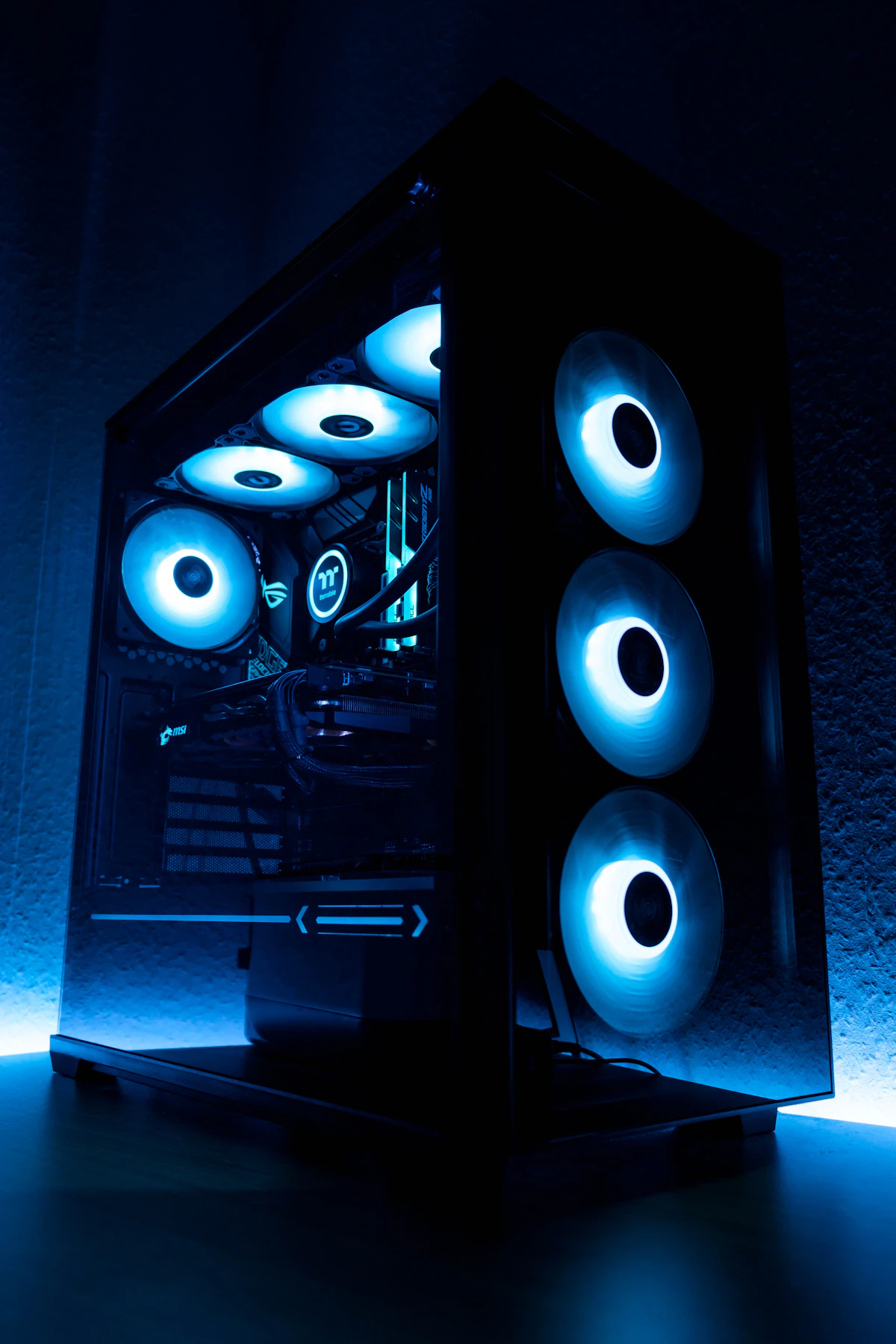
The 122-Day Engineering Marvel in Memphis
In the world of hyperscaler supercomputing, building a modern gigawatt-scale AI datacenter typically requires between 24 and 36 months: acquiring land, securing municipal power utility interconnects, pouring concrete, installing complex chillers, and laying tens of thousands of optical fiber cables.
In the summer of 2024, Elon Musk's AI company, xAI, shattered every historical infrastructure precedent: - In 122 days, xAI transformed an empty former industrial warehouse in Memphis, Tennessee, into Colossus—the world's largest single AI training supercluster. - The cluster went online with 100,000 liquid-cooled NVIDIA H100 and H200 Tensor Core GPUs running under a single unified network fabric, with plans to expand to 200,000 GPUs. - Colossus was brought online specifically to train xAI's flagship frontier model: Grok 3.
How did an infrastructure team design, build, power, and cool 100,000 700-watt GPUs in four months without melting the power grid?
┌────────────────────────────────────────────────────────────────────────┐
│                        xAI Colossus Megacluster                        │
│                     (Memphis, Tennessee Facility)                      │
├────────────────────────────────────────────────────────────────────────┤
│ Electrical Power: 150 Megawatts                                        │
│ - Utility substation interconnect + 14 mobile natural gas turbines    │
├────────────────────────────────────────────────────────────────────────┤
│ Compute: 100,000 NVIDIA Hopper GPUs (SXM5 H100 / H200)                 │
│ - Supermicro 8U liquid-cooled servers (8 GPUs per chassis)             │
│ - Direct-to-chip copper cold plates & closed-loop CDU manifolds        │
├────────────────────────────────────────────────────────────────────────┤
│ Network Fabric: NVIDIA Spectrum-X Ethernet (RoCEv2)                    │
│ - 800 Gbps per compute node via BlueField-3 SuperNICs                  │
│ - Non-blocking rail-optimized leaf-spine topology                      │
└────────────────────────────────────────────────────────────────────────┘
---
Megawatt Power Delivery & Thermodynamics
Powering 100,000 Hopper GPUs along with their host CPUs, optical transceivers, and cooling pumps demands over 150 Megawatts (MW) of continuous electrical capacity—equivalent to the power consumption of an entire city of 100,000 homes.
To circumvent multi-year utility substation construction delays: 1. Hybrid Grid & Turbine Infrastructure: xAI negotiated an initial 50 MW interconnect from the local utility (Memphis Light, Gas and Water) while simultaneously deploying 14 industrial mobile natural gas turbine generators on-site to supply the remaining 100 MW of immediate electrical demand. 2. Direct-to-Chip Liquid Cooling: Air-cooling 100,000 GPUs is physically impossible inside a single enclosed warehouse; air cannot move heat fast enough without deafening acoustic pressure and thermal throttling. 3. Supermicro Liquid Cooling Architecture: Every 8-GPU server chassis features direct-to-chip copper cold plates attached directly to the Hopper silicon and HBM3 memory stacks. Chilled water circulates at high flow rates, transferring heat to external cooling distribution units (CDUs) and massive outdoor cooling towers.
---
Networking Architecture: RoCEv2 Ethernet vs InfiniBand
Historically, every frontier AI training cluster deployed NVIDIA's proprietary Quantum-2 InfiniBand networking due to its ultra-low latency and hardware-based subnet manager.
For Colossus, xAI made a daring architectural pivot: they deployed NVIDIA Spectrum-X Ethernet with RoCEv2 (RDMA over Converged Ethernet).
Host GPU 0-7 ◄──► 8x BlueField-3 SuperNICs (800 Gbps)
                          │
                          ▼
            Leaf Switches (Spectrum-4 51.2 Tbps)
                          │
                          ▼
            Spine Switches (Spectrum-4 Core Fabric)
                          │
       [Adaptive Routing + Congestion Management (PFC/ECN)]
Why did xAI select Ethernet over InfiniBand? - Availability and Supply Chain: Procuring 100,000 InfiniBand optical cables and switches faced severe supplier lead times; Ethernet components were significantly more accessible. - Spectrum-X Innovations: NVIDIA's Spectrum-4 switches resolved traditional Ethernet packet loss through: - Dynamic Packet Spraying: Distributes individual packets across multiple equal-cost multipath (ECMP) routes, preventing elephant-flow bottleneck collisions. - Hardware Telemetry Congestion Notification: BlueField-3 SuperNICs dynamically throttle transmission rates when fabric buffers experience micro-congestion. - Lossless RoCEv2: Delivers 95%+ effective network fabric throughput, matching InfiniBand's collective communication efficiency during distributed all-reduce operations.
---
Distributed Fault Tolerance at 100,000 GPUs
At the scale of 100,000 GPUs, the hardware Mean Time Between Failures (MTBF) drops dramatically: - With 100,000 GPUs and millions of DRAM chips, optical transceivers, and power converters, a hardware failure occurs every few hours. - If a distributed training job on 100,000 GPUs crashes whenever a single GPU fails, the cluster would spend 100% of its time restarting and never make training progress.
To achieve sustained training efficiency on Grok 3, xAI engineered custom fault-tolerance mechanisms:
$$\text{Effective Training Goodput} = \frac{T_{\text{compute}}}{T_{\text{compute}} + T_{\text{checkpoint}} + T_{\text{recovery}}}$$
1. In-Memory Asynchronous Checkpointing: Rather than pausing training to write multi-terabyte model states to slow network-attached storage, checkpoint tensors are dumped asynchronously to host RAM and local NVMe in seconds while the next step begins. 2. Automated Sub-Minute Node Eviction: When a GPU experiences an unrecoverable ECC error or bus lockup, the orchestrator detects the failure, isolates the faulty node, switches in a warm spare node, and resumes training from the latest checkpoint in under 90 seconds.
---
Megacluster Architectural Comparison
| Cluster Metric | Meta Llama 3 Cluster | Microsoft Eagle Cluster | xAI Colossus Cluster | | :--- | :---: | :---: | :---: | | GPU Count | 24,576 H100 | 14,400 H100 | 100,000 H100 / H200 | | Cooling Method | Air-Cooled / Hybrid | Liquid Cold Plates | 100% Direct-to-Chip Liquid | | Network Fabric | RoCEv2 (Arista) / InfiniBand | Quantum-2 InfiniBand | NVIDIA Spectrum-X (RoCEv2) | | Node Network Bandwidth | 400 Gbps - 800 Gbps | 400 Gbps | 800 Gbps per Host | | Build Timeline | ~ 18 Months | ~ 12 Months | 122 Days (Record Speed) | | Target Model | Llama 3 405B | Internal Frontier | Grok 3 |
---
The New Benchmark for Frontier AI Scale
Colossus demonstrated that the speed of AI progress is dictated not merely by algorithmic cleverness, but by hard industrial execution: civil engineering, turbine procurement, liquid thermodynamics, and high-speed network tuning.
As the industry prepares for the next scaling frontier with NVIDIA Blackwell Ultra GB200 clusters, xAI Colossus proved that massive clusters can be constructed in months rather than years—redefining what is possible in distributed AI infrastructure.