From Autocomplete to Autonomy: Inside the New Wave of Agentic Software Engineering
When GitHub Copilot launched in 2021, it felt like magic: start typing a function signature, and grey ghost text would propose the implementation. For three years, inline autocomplete was the benchmark for developer AI.
However, over the past twelve months, a profound architectural transition has swept through the developer tools landscape. Autocomplete is no longer the frontier. Today, software engineering is entering the agentic era—led by specialized IDEs like Cursor, Codeium Windsurf, and autonomous terminal agents like Claude Code.
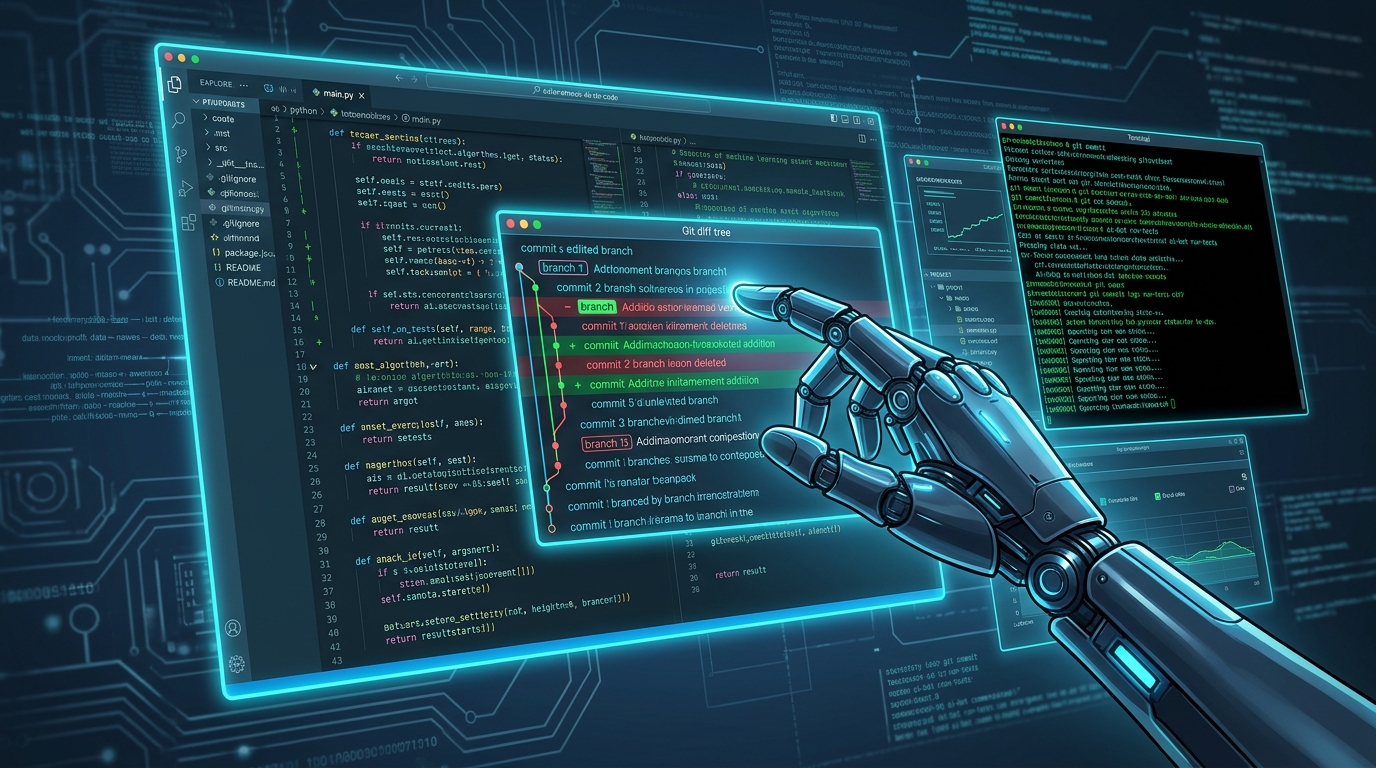
Instead of assisting developers line by line, agentic environments plan multi-file refactors, execute terminal commands, run test suites, interpret compiler stack traces, and commit working code directly to Git repositories.
---
1. The Three Generations of Developer AI
To understand where software development is heading, consider the evolutionary progression:
| Generation | Era | Interaction Model | Scope of Awareness | Leading Examples | | :--- | :--- | :--- | :--- | :--- | | Gen 1: Autocomplete | 2021–2023 | Inline ghost text tab completions | Current active file, ~2K tokens | GitHub Copilot (v1), Tabnine | | Gen 2: Sidebar Chat | 2023–2024 | Chat modal beside the code editor | Current selection + manual attachments | Copilot Chat, Cody | | Gen 3: Agentic IDEs | 2024–2026 | Multi-file Composer, terminal agents | Full-repo AST index, terminal, git history | Cursor, Windsurf, Claude Code |
---
2. Key Capabilities of the Agentic Stack
A. Whole-Codebase Semantic Indexing
In an agentic IDE, every repository is automatically indexed into abstract syntax trees (ASTs) and vector embeddings. When a developer types @codebase refactor user authentication to support OAuth2, the agent does not guess. It traverses route handlers, database schemas, token validation middleware, and unit test suites to construct a deterministic dependency graph.
B. Multi-File Parallel Diffing (Composer / Cascades) Rather than printing markdown code blocks for the user to copy and paste, agentic editors directly open multiple files in parallel, generate atomic diffs (green additions and red deletions), and allow the developer to review and accept changes with a single keystroke.
C. Terminal Feedback Loops & Autonomous Debugging
The critical differentiator of Gen 3 agents is their ability to observe environmental feedback. When Claude Code or Cursor runs npm test or cargo build in the background and encounters a failing test, the agent reads the stderr stack trace, locates the offending line, fixes the bug, and re-runs the test suite until all checks pass.
---
3. Best Practices for Developers Working with AI Agents
To maximize leverage while maintaining pristine codebase hygiene on AlsoClick: 1. Invest in Robust Automated Test Suites: Agents are only as trustworthy as your verification suite. Comprehensive unit and integration tests serve as guardrails that allow agents to refactor aggressively without regressions. 2. Curate Clean Project Rules (`AGENTS.md`): Explicit instructions detailing architectural patterns, forbidden libraries, and style conventions ensure agents generate idiomatic code tailored to your stack. 3. Commit Atomically: Break agentic requests into modular increments rather than asking for entire application rewrites in a single prompt.
---
4. Why It Matters
The shift to agentic coding is not about replacing software engineers; it is about elevating developers from manual typists to system architects and code reviewers. By delegating boilerplate wiring, API migrations, and repetitive test writing to autonomous agents, engineering teams can ship complex products in days rather than quarters.
---