Beyond Text Summaries: How Google NotebookLM Turned Documents Into Conversational AI Podcasts
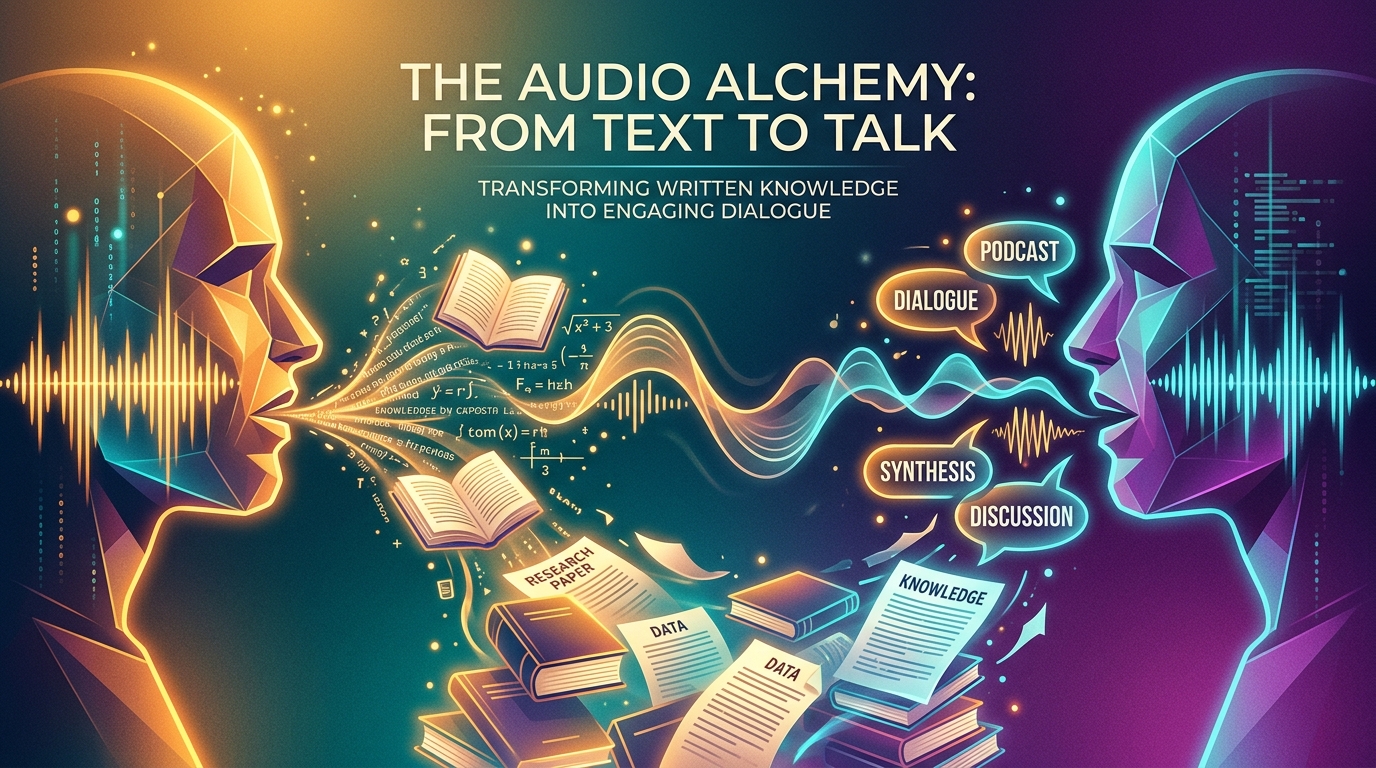
For decades, the standard software response to information overload was the same: generate a bulleted summary. While bullet points condense word counts, they often strip away nuance, context, and emotional engagement. Readers scan them passively, retaining very little.
In September, Google DeepMind and Google Labs quietly deployed a feature inside their personalized research notebook, NotebookLM, that captured the internet's imagination: Audio Overviews. With a single click, users can transform dozens of uploaded research papers, PDF textbooks, legal briefs, or meeting notes into a lively, 10-to-15 minute "deep dive" podcast conversation between two synthetic AI co-hosts.
---
1. The Technology Behind Audio Overviews
What made Audio Overviews go viral was not merely text-to-speech—it was the uncanny conversational realism. To understand why it works so effectively, we must look at the underlying pipeline:
1. Source Grounding via Gemini 1.5 Pro NotebookLM restricts its generation strictly to the user's uploaded sources. Powered by Gemini 1.5 Pro's 1-million-token context window, the model reads through hundreds of pages simultaneously, mapping out conflicting viewpoints, compelling statistics, and real-world analogies without hallucinating external web folklore.
2. Conversational Scripting & Natural Disfluencies Rather than reciting an academic essay, the system writes a dynamic theatrical script between two distinct host personalities: - Host A frequently takes the role of the inquisitive explorer who poses clarifying questions. - Host B serves as the analytical synthesizer who provides illustrative analogies. Crucially, the dialogue includes natural human conversational markers: interruptions, chuckles, thoughtful pauses ("*right, exactly*", "*hmm, let's unpack that*"), and vocal inflections that mask any robotic stiffness.
3. High-Fidelity Neural Speech Synthesis The scripted dialogue is passed through Google's state-of-the-art neural acoustic models. The timing of interjections, breath control, and mutual laughter creates an auditory illusion so convincing that listeners frequently forget they are hearing synthetic voices.
---
2. Real-World Applications and Case Studies
Across the AlsoClick community, professionals and creators are utilizing Audio Overviews in novel ways: - Academic Researchers: Ingesting 15 peer-reviewed climate science papers and listening to the co-hosts debate methodologies during a morning commute. - Software Engineers: Uploading 200-page internal architecture RFCs to understand technical tradeoffs before an architectural review meeting. - Medical Students: Transforming pharmacology textbooks into interactive review discussions to reinforce complex drug interaction memorization. - Executive Strategy: Converting dry quarterly earnings reports and competitor transcripts into digestible executive audio debriefs.
---
3. Why It Matters
Audio Overviews marks a pivotal moment in human-computer interaction: multi-modal modality shifting. Knowledge is no longer locked into the format in which it was authored. Dense, forbidding text can instantly become accessible spoken dialogue.
As Google continues expanding NotebookLM with support for over 50 languages and interactive Q&A interruptions, the boundaries between consuming information and participating in a seminar are dissolving.
---